
Although it is not possible to explain coffee, on which people have written books, articles and poems, named their regions, their belongings and attributed material and spiritual meanings, from the very beginning to the point where it came from, we have explained it for you in a way to answer every question you may have from the production of coffee to its presentation, and we have prepared the longest coffee article published on the internet for you.
Sit back with your coffee and witness this long journey starting from the history of coffee. If you haven’t tried the world’s highest caffeine coffee before, you can place your first order from the link below.

WHAT IS COFFEE?
Coffee is a type of beverage obtained by separating the beans from the fruits of the tree named coffea as a result of various processes and preparing them with brewing methods that differ from region to region. The beans of these fruits are consumed by brewing in water after various processes.
Although each country has its own unique beverages created according to its cultural palate habits, coffee has managed to enter the lives of most people on earth.
Each society has attributed its own meanings to coffee; it has roasted, brewed and presented it according to its own characteristics. Since its emergence, it has been a source of livelihood for countless people and has shaped the economy of the region where it grows.
Today, it continues to increase its value, gaining the appreciation of people and reaching every corner of the world without stopping. For this reason, it still maintains its feature of being the most traded substance after oil in the world.
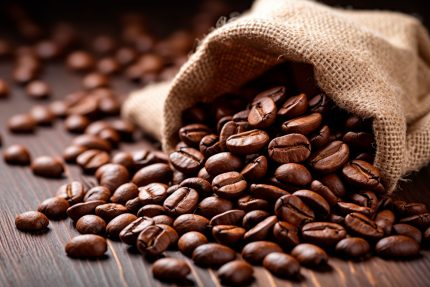
Raw, light roasted, medium roasted and dark roasted coffee beans are placed side by side respectively.

COFFEE HISTORY HOW WAS COFFEE DISCOVERED?
Although coffee is one of the most consumed beverages in the world, there is no proven information about when it first appeared. This situation leads to many independent rumours about the discovery of coffee.
As such, it is not possible to describe the discovery of coffee in precise terms, but we can have an idea about the discovery of coffee through the most popular legends that have common points.
The most famous of these stories tells that coffee was found in Ethiopia thanks to goats. In this rumour, the Arabs who were shepherding in a region within the borders of Abyssinia at the time, which is now part of Ethiopia, observed that the goats did not sleep for days and were full of energy.
Later, when they examined what the goats did to find out the reason for this, they thought that the goats had eaten a plant that had never been seen before and that this plant was the cause of the situation.
They collected this plant and took it to their dervishes for advice, and when a dervish named Shazili saw the same effects on himself, the magical effects of coffee and caffeine were understood by mankind for the first time.
The coffee bean, which was first ground into flour and mixed into bread dough, was later boiled in water and drunk, and thus began the coffee adventure that extends to the present day.

HOW DID COFFEE SPREAD AROUND THE WORLD?
After coffee was first consumed in Abyssinia, it was brought to Yemen and gained its real fame here. Today, Yemen is the first country that comes to mind when it comes to coffee, but this is not the original homeland of coffee. Yemen is the country that created the coffee culture.
It is said that the person who spread coffee from Abyssinia to the world was the Ottoman officer Özdemir Pasha. When Turkish coffee is compared to other coffee cultures periodically, the fact that it dates back to the earliest dates is enough to prove that this claim is true.
WHERE DOES COFFEE GET ITS NAME?
It is said that Kaffa, a coffee-growing region in Abyssinia, gave its name to coffee. The similarity between the two words and the claim that coffee was discovered in Abyssinia support this view.
COFFEE CULTURES AROUND THE WORLD
Each nation has consumed coffee in different ways as a result of its own cultural heritage, taste and the characteristics of the climate in which it lives. These differences have led to differences in the way coffee is cooked and the additional ingredients used to flavour it.
Each nation continues to keep its own coffee culture alive, but many of them have not been able to influence other countries on a global scale, while some have adopted their own culture all over the world.
TURKISH COFFEE CULTURE (1540)
The most distinctive feature of Turkish coffee is that it is cooked in a cezve and served with the grounds. In other coffee cultures, the coffee pulp is drained after the brewing process, but this is not the case in Turkish coffee. Even after serving, the coffee continues to brew in the cup.
In addition, the portions are very small, which results in a strong coffee. For those who do not like coffee in this way, they tried to sweeten it by mixing honey at first. In the following period, sugar replaced honey.
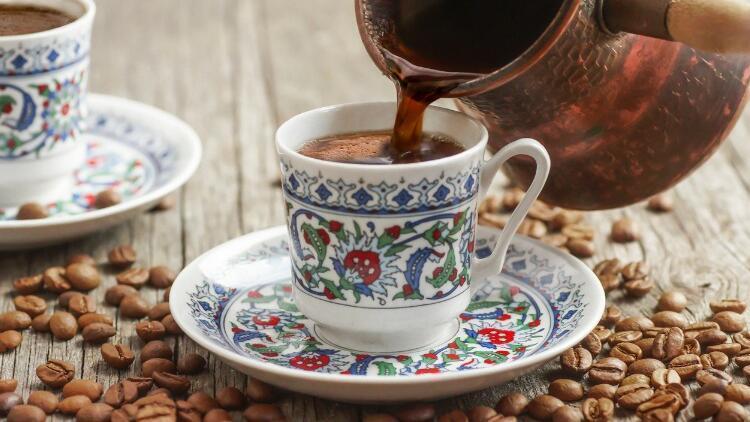
Despite such tasting characteristics, Turkish coffee is a type of coffee that stands out not with its flavour but with its spiritual aspect. The naive understanding of hunger by offering water with coffee to the guests, the cooking of coffee during the ceremony of asking for a girl, and its identification with Turkish delight, another important part of our culture, are just a few of the elements that strengthen the spiritual aspect of coffee.
As a result, many proverbs emphasising friendship over coffee, such as “A cup of coffee has 40 years of memory”, find a place in our culture.

Why has Turkish coffee lagged behind other cultures today, despite such a long history and being the first coffee culture in history?
Everyone has a different answer to this question, and there are those who think that this is not the case, but it is a fact that Turkish coffee culture cannot compete with the Italian coffee culture that dominates the whole world.
The biggest reason for this is that the spiritual aspect is at the forefront rather than the tasting aspect mentioned above.
For example, when we look at coffees originating from Italy, there are many options such as espresso for those who like strong and intense flavours, lungo to soften it a little, latte for those who like it with milk, capuccino for those who like it foamy.
However, the variety of Turkish coffee is much more limited. This causes it not to appeal to everyone and not to be adopted worldwide.
ITALIAN COFFEE CULTURE (1884)
Coffee culture in Italy began to rise in 1884, the year espresso was invented. Most of the coffees we consume today, whether they belong to Italians or not, are nourished by Italian culture because they are espresso-based.
The biggest reason why coffee is so widespread in Italy and this spread has reached the whole world is that there are so many types of coffee to appeal to everyone.
Even cortado, the invention of the Spaniards, or Americano, the invention of American soldiers, contains espresso. This is an indication that Italians have mastered coffee and influenced the world.

FRENCH COFFEE CULTURE (1852)
Although filter coffee is a type of coffee invented by the French, Italians and Germans, it is identified with French culture. Filter coffee is obtained by filtering the coffee brewed by boiling from the pulp after brewing.
In France, it is usually served at breakfast with croissants and is most commonly consumed at this meal. The French use milk to soften filter coffee, but it is more commonly consumed black around the world.
TYPES OF COFFEE BEANS
The coffee bean is a plant that has too many species to count worldwide, but we can talk about three species that are grown and attracted attention: Arabica, Robusta and Liberica.
Among these species, Arabica and Robusta beans are the most widely grown and consumed coffee beans, although Liberica is not traded much because it is produced in very small quantities in a limited area.

WHAT IS ARABICA COFFEE?
The Arabica coffee bean, whose homeland is Ethiopia, accounts for nearly 2/3 of the world’s coffee production. It was first identified in the 1700s and is much more sensitive than Robusta coffee beans.
The biggest difference between Robusta and Arabica types is that the caffeine content of Arabica beans is much less. Arabica beans are grown between 600-2000 metres. More contact with fresh air ensures that the aroma is much higher than Robusta beans. Fruit and spice flavours are felt much more clearly.
Production is much more difficult than other species. The coffee fruit must be picked from the tree one by one by hand. In addition, the fact that it is grown in high regions and in a harsh climate compared to others causes the harvest to burn from time to time and the workers to experience health problems.
These features, which increase its aroma and make its production difficult, are the biggest reason for its high price.
WHAT IS ROBUSTA COFFEE?
It is grown between 600 – 1400 metres in altitude and meets 1/3 of the world’s coffee production. It was defined as a separate class in the 1900s. Its production is much easier than Arabica. It yields more crops and is much easier to collect. Therefore, its cost is lower.
Body and cocoa flavours are felt more. Its cream is much more than Arabica and Robusta is generally preferred in espresso blends. In Italy, it is very difficult to find an espresso blend that does not contain Robusta.
WHERE DOES COFFEE GROW?
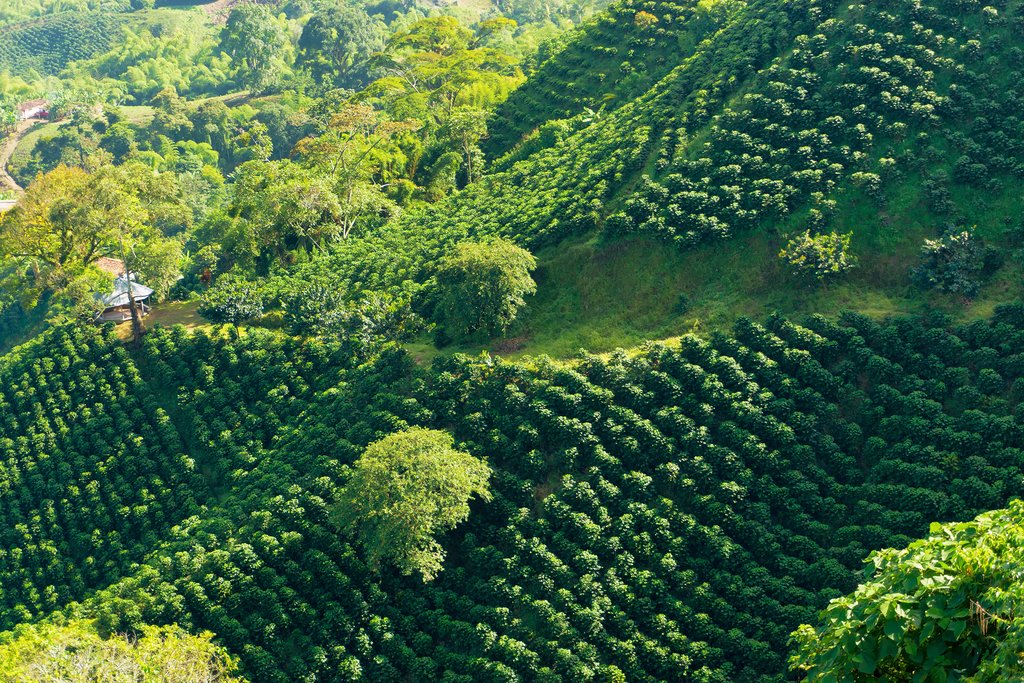
The tropical climate regions between the Tropics of Capricorn and Cancer are the most ideal places for growing coffee. The region where coffee will be grown should receive regular rainfall and the temperature difference should be low.
Coffee cultivation is one of the main sources of income in regions with a tropical climate with these characteristics. In various countries where this type of climate is not observed, coffee production is also carried out, albeit to a lesser extent.
CONTINENT OF AMERICA
South American countries meet most of the coffee production. Apart from this, coffee is also produced in other regions of America. In this region, the coffees of Guatemala, Costa Rica, Brazil, Colombia and Mexico come to the fore.
Brazil alone accounts for 30 % of the world’s coffee production.
AFRICAN CONTINENT
The African continent, the region where coffee was discovered, also has an important share in coffee production. The African continent harbours climates that vary from region to region. While some regions are desertified, some regions have ideal characteristics for coffee cultivation. Countries such as Ethiopia, Ivory Coast and Kenya have developed in coffee production.
African beans have a more fruity flavour.
ARABIAN PENINSULA
Coffee was first consumed as a beverage in the Arabian Peninsula. Arabs are also the ones who discovered coffee. Therefore, they took part in its production as well as its consumption. The leading country in coffee production in this region is Yemen, which is identified with coffee.
ASIA-PACIFIC REGION
The Asian continent is also one of the places where coffee is produced, although very limited. Indonesia is the largest coffee producer in Asia.
Despite the constant floods and raids in Indonesia, coffee plantations are often destroyed, but a significant part of the people continue to make a living by producing coffee. Apart from Indonesia, Vietnam is also one of the Asian countries where coffee is produced.
PRODUCTION STAGES OF COFFEE
Coffee, which we love to drink every day and has managed to become one of the indispensable parts of our lives, goes through a long journey from the moment it is planted in the soil to the moment it is ready to be roasted as raw beans. This long and arduous journey not only employs a great deal of labour in the countries where coffee is produced, but also multiplies its value by increasing its cost.
There are many stages in the process, including the planting of the first seed in the ground, the blossoming of the coffee flower, the harvesting of the harvest, the shelling, fermenting, grading and packaging of the coffee fruits for shipment.
SOWING THE SEED
It takes about three years from the time the coffee seed is planted in the ground until the first coffee fruits are picked. During this period, serious care is taken in order to get quality coffee.
BLOOMING OF THE COFFEE FLOWER
The coffee flower usually blooms once a year, but in some cases it can bloom more than once. They are white in colour. After a short period of time, these flowers wither and give way to the coffee fruit and these fruits are expected to ripen.

HARVESTING COFFEE
Approximately 9-11 months after the coffee fruits are formed, the fruits are ready for picking. Generally, there are picking methods used for arabica beans and stripping methods used for robusta beans. The picked fruits are taken to processing plants called Beneficio.
HOW TO PROCESS COFFEE
Coffee is the beans of a cherry-like fruit, and after being picked, the beans are subjected to various processes to separate them from the fruit. Various coffee processing methods are used according to the abundance of water resources in the region where the coffee is collected, the traditions of the people of the region and the taste characteristics that will occur in the cup.

A- WET PROCESS
B- NON-WASHED (DRY) PROCESS (DRY PROCESS – NATURAL PROCESS)
C- SEMI-WASHED PROCESS (PULPED – NATURAL PROCESS)
GRADING AND PACKAGING:
At the last stage, the coffee beans are sorted by type and delivered to the harbours in big sacks to be shipped to the world.In order to obtain decaffeinated coffee (decaf coffee), the coffee must be decaffeinated at this stage. This is because it is at the roasting stage that the coffee reaches its original flavour. After roasting, it is not possible to separate the caffeine from the coffee.
HOW TO ROAST COFFEE?
The correct roasting of a coffee is as important as the quality of the beans for the flavour of the coffee.
It is not enough for a roaster to memorise all the stages of coffee roasting, because criteria such as the social tasting habits of the people of the region where the coffee will be consumed, the roasting measure to obtain a high level of aroma from the beans at hand force the roaster to innovate according to changing conditions.
For this reason, roasting coffee is a job that is learnt not by reading or listening, but rather by seeing and experiencing. Apart from this, it is of course necessary to know the theoretical part and the general stages.

HOW TO GRIND COFFEE?
Many manual and electric coffee grinders are produced for home or cafés. Grinding the coffee to the correct thickness allows you to get the maximum flavour from the brewed coffee.
For example, using coarse ground coffee in equipment with a short brewing time such as V60 causes the flavour to be very low; using fine ground coffee in equipment with a long brewing time such as french press causes the coffee to have a bitter taste.
Therefore, the most appropriate grind for each equipment should be preferred.
Too coarse Cold brew
Thick: French press
Medium-thick: Chemex
Medium: Paper filter coffee machines, aeropress and syphon
Medium-fine:V60 and short-term aeropress brews
Fine: Moka pot, espresso and extra short aeropress brews
Very fine: Turkish coffee
HOW TO MAKE FILTER COFFEE?
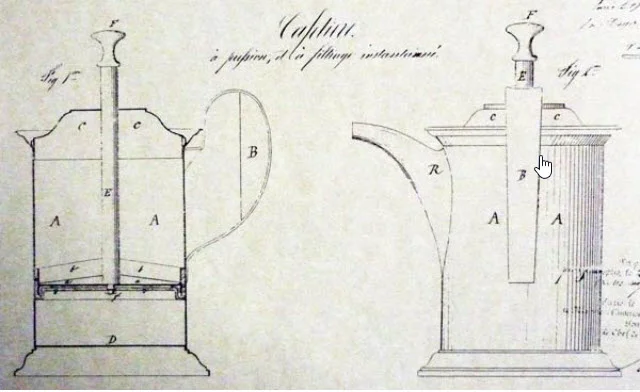
Originally made only with the first version of the french press, filter coffee has turned into a type of coffee that can be made with many different methods with new inventions and additions over time. These different methods not only change the flavour of filter coffee, but also provide convenience according to the conditions of the person.
While there are equipment types such as paper filters, cloth filters and metal filters that change the flavour, there are also equipment that emphasise practicality such as aeropress used in natural environments such as camping or easily cleanable v60.

FILTER COFFEE MAKING WITH FRENCH PRESS:
Although its name is “French”, the first patent was taken by Italians.
French press, which is the most widely used equipment today, can also be used to brew herbal tea in addition to coffee. Thanks to its practical use and easy cleaning, it saves us all a lot of time.
15 gr. 300 ml. boil water for 300 gr. coarse ground coffee.
Add the boiling water to the cup and french press, just enough to wet the equipment and shake. This prevents your coffee from cooling prematurely.
Add the coffee to the french press.
Add enough water over the coffee to wet all the coffee and wait for 30 seconds. The pre-brewing process will enhance the flavour of your coffee.
Pour the remaining water into the french press and let it brew for 4-6 minutes and at the end of the time, press and pour the coffee into your cup.
FILTER COFFEE MAKING WITH HARIO V60:
v60 is a coffee brewing equipment that looks like a cup with six holes. Brewing time is shorter than other equipment. A paper filter is required for the v60, which is used by placing it on the cup or jug.
The paper filter is placed on the v60 and finely ground coffee is placed on it. then water is poured over the coffee and the water that comes down by contacting the coffee particles is filtered through the filter paper and poured into the cup-jug. It is much easier to clean than other equipment.
FILTER COFFEE MAKING WITH CHEMEX:
Chemex is an equipment designed by German inventor Peter Schlumbohm in 1941, which stands out with its aesthetic appearance and is very similar to the v60 in terms of use.
The chemex, which has wooden and glass handle types, has 3 cup, 6 cup, 8 cup types with a cup of 150 ml. A paper filter is required for brewing and the brewing process is the same as v60.
FILTER COFFEE MAKING WITH AEROPRESS:
Aeropress is the most preferred coffee brewing equipment of mountaineers and campers with its impact-resistant material and fast brewing feature. Just like the French press, it utilises propulsion power.
It was introduced to coffee lovers in 2005 by American Alan Adler, a toy designer, and has been growing in popularity ever since. It provides great convenience on journeys thanks to its simple cleaning.
When using it, first warm the inside with hot water so that the coffee does not cool down immediately, as with other equipment. Then place 17 gr. medium-fine ground coffee inside. Pour 50 ml. water over the coffee for pre-brewing and mix. After a 45-second waiting time, slowly add 180 ml of water (230 ml of water is ideal with pre-brewing) to the mixture over 30-40 seconds.
Finally, after placing the filter paper in the aeropress (you can wet it with hot water to avoid the taste of paper), place it on the coffee glass and press for 30 seconds.
FILTER COFFEE MAKING WITH SYPHON:
Syphon is the most aesthetically pleasing piece of equipment. The brewing process turns into a show and the coffee stands out not for its flavour but for this aspect. The upper two parts of the syphon, which consists of 3 sections in total, are used to store the coffee and water.
At the bottom, there is another section that works with the help of spirit. Syphon was designed by a Scottish woman named Robert Napier, a marine engineer, in 1840.
It is usually used in cafes and hotels because the cleaning and brewing stage is troublesome.
When brewing coffee in a syphon, 250 ml of water and 15 g of coffee are used for one person. You can brew coffee with the syphon by putting the water in the middle and the coffee in the top chamber and turning on the heater at the bottom.
WHAT IS ESPRESSO?
Espresso is the most consumed type of coffee along with filter coffee. However, because of its strong drink and density, it does not match the taste of many people. For this reason, it is not consumed alone; It is consumed with variations such as latte, cappuccino, americano with milk or water added.
Espresso is a type of coffee invented in Italy in the 1900s. Finely ground and pressurised coffee is used. It is obtained by using the power of pressure in a steam-powered machine.
The resulting coffee is very dense and has a layer of cream on the surface. The amount of caffeine per milligram is higher than other types of coffee.
A serving of espresso is approximately 30 ml and 7-8 grams of coffee is used. If consumed alone, two shots are usually used. We can liken espresso to Turkish coffee with its taste, although the preparation and presentation are different.

HOW TO MAKE ESPRESSO?
Making espresso is much more difficult than other coffees and requires experience. A good coffee blend is needed for a delicious espresso. The coffee for espresso should be dark roasted.
Finely ground coffee is used when making espresso. Grinding the coffee just before making espresso is one of the factors that determine the flavour.
REQUIREMENTS FOR ESPRESSO;
7-8 grams of finely ground coffee
9 bar water pressure
Clean water
90 degree temperature
15-20kg compression pressure
24-27 seconds flow time
Place the ground coffee in the espresso spoon.
The coffee is compacted with a tamper (tamper wedge). Tamping too much at this stage may cause the coffee to burn when it comes into contact with water, while under-tamping will cause the espresso to lose its density and become watery. To get the right measure, fix the espresso spoon on a suitable surface during compression and use wrist strength to compress. If you use your shoulder strength, you will probably over-tamp and the coffee will burn, your wrist strength will be sufficient for this process.
Before using the espresso machine, press the start button and wait for a second or two to clean the pipes. No matter how good the espresso you make, if you skip this step, your work is worthless.
Place the espresso spoon into the hopper in the machine, squeeze it and put the espresso cup just below it and switch it on. If you leave the espresso spoon in the machine for a long time before switching on, you will cause the coffee to burn.
Wait between 24-27 seconds after switching on. You can stop when the coffee starts to dilute.
Your espresso is ready, do not forget to clean the espresso spoon and the pipes of the machine before serving.
Espresso cups are usually 45 ml in size and have an oval structure. When you look at a good espresso from the top, the cream on the surface should be thick and should not show the coffee underneath.
You can throw some sugar on it to test its density; if the sugar immediately sinks to the bottom, the consistency is not right, if it holds on the surface and sinks after a certain period of time, it means that you have made a good espresso.
Not everyone can drink espresso because of its hardness and dense consistency. In order to find a solution to this in time, it was tried to flavour it with various additions. Some of these have been adopted by people and have continued to develop by increasing its popularity until today.
Drinks such as latte and macchiato, which are most preferred in third generation coffee shops, are based on espresso.
HOT COFFEE
AMERICANO
It is obtained from a mixture of espresso and hot water. In the 20th century, it was first made by American soldiers to soften the taste of espresso. It is made by adding 60 ml espresso (double shot) to 120 ml hot water.
The most important point in terms of flavour and presentation is that hot water is added first and espresso afterwards. If hot water is added to the espresso, the coffee burns and becomes bitter. At the same time, the creaminess of the espresso is lost.
If the espresso is poured over the hot water, you will get a more flavourful and creamy coffee.
ESPRESSO MACCHIATO
It is made by adding one or two spoons of milk foam to a shot of espresso. The most important point is not to add milk and not to exaggerate the milk foam. The milk foam looks like speckles on black coffee. Therefore, it is also known as speckled coffee.
LATTE
It consists of a mixture of creamed milk on a shot of espresso. It is served in 180 ml porcelain cups. A good latte has no foam and a thin layer of cream.
The visual aspect is emphasised by making perfect presentations with latte art. It can be made sweeter by giving sugary flavours with caramel or similar syrups. Served in oval and wide glasses.
LATTE MACCHIATO
The difference from latte is that it is served in a glass cup and has foam on it. When viewed from the side, all three layers of coffee, milk and milk foam are visible and do not mix.
It is a type of coffee that stands out not with its taste but with its visual aspect. It is served in 180 ml tall and thin glass glasses. By adding caramel or another syrup, the number of layers can be increased to 4, increasing both the flavour and aesthetic aspect.
CAPUCCINO
Capuccino is a type of coffee invented by Italians and presented to the world. As with latte, it is made by adding 150 ml of milk to 30 ml of espresso. The only difference with latte is that there is a thick milk foam on the milk in capuccino.
It consists of 3 layers: coffee, milk and milk foam. It is served in 180 ml round porcelain cups that taper from top to bottom.
Capuccino takes its name from the priests called Cappucin in Italy at the time of its invention. At the time, these priests wore black clothes and a white hat. It is rumoured that Capuccino was given this name because it has a white appearance on brown when viewed from the side.
MOCHA
It is made by adding melted chocolate to the latte base. It is served by squeezing an optional special cream on it. It is ideal for those who want to get sugary flavours from coffee. There is also a type called White Mocha made with white chocolate.
FLAT WHITE
It is obtained by adding milk to double shot espresso. The difference from latte is that the coffee flavour is more intense and the cream is thinner. It is served in 40 ml cups. It started to be made in Australia and spread around the world.
CORTADO
It consists of creamy milk and doule shot espresso. Served in a 120 ml glass cup. The difference from latte is that the amount of milk and coffee is equal, so the field is hard.
The name Cortado is the past tense of the Spanish verb meaning “to cut”. This expression is used because it cuts the hardness of espresso and softens it.
RISTRETTO
It is a type of espresso that uses 15 ml of water for 8 g of coffee. It is stronger and denser than espresso, so it does not appeal to everyone.
LUNGO
It is a type of espresso in which 60 ml of water is used for 8 g of coffee. It is obtained by pulling espresso for a longer time. It has a lighter and softer drink than espresso.
COLD COFFEE
ICE AMERICANO
It is served by adding double shot espresso over ice cold water. As in its normal form, the addition of coffee afterwards is a must for its flavour and appearance. Served in oval glass glasses.
ICE LATTE
Served with a shot of espresso over iced cold milk. If the espresso is poured slowly at a single point, the coffee and milk do not mix, resulting in an aesthetically marvellous appearance. Served in oval glass glasses.
ICE MOCHA
Mix ice, milk and chocolate in a shaker. Then put ice into the glass and add the cold chocolate milk. A single shot of espresso is added and served in oval glass glasses. Decorations made with chocolate sauce on the base strengthens the aesthetic aspect. :It can also be made with white chocolate.
AFFOGATO
It is a type of coffee dessert made by drawing espresso on a ball of ice cream. The most important point is that the ice cream is vanilla.
It can be made with ice cream of different flavours, but vanilla ice cream is essential for it to find its real flavour. Various decorations can be made with sauces. It is served with a spoon in the glass used for Cortado.
WHAT IS COLD BREW, HOW TO MAKE IT?
Although coffee is a drink we love and need to wake up, it becomes unbearable in the scorching heat of the summer months. The most famous of the cold coffees made to prevent this is cold brew, which is served in bottles or ice-filled glasses!
Thanks to cold brew, we are not deprived of our coffee pleasure and we cool down at the same time. Although there are special equipment to make cold brew coffee, you can easily prepare it with the ingredients you have at hand.
WHAT IS COLD BREW?
Cold brew, unlike other types of cold coffee, is obtained by brewing coffee with cold water. Since coffee beans give their aroma to hot water faster, cold brew requires a long brewing time in order to fully extract the essence of the coffee.
It is important that the resulting coffee is clear and not muddy. For this reason, it is necessary to use thickly ground beans that will not pass into the water. Ice can also be used with water during brewing, for example 200 g of ice for 800 ml of water.
This is one of the biggest factors affecting the flavour of cold brew coffee. Keeping too much ice will cause the coffee to burn.
HOW TO MAKE COLD BREW?
There are many different methods of making cold brew. Although the way of brewing changes depending on these methods, the underlying mentality is the same. Coffee should be brewed for a long time (about 20 hours) and with cold water.
Coffees that are left to brew with boiling or warm water and then cooled are not classified as cold brew. Coffee brewed with hot water develops salty flavours when cooled, which greatly weakens its aroma.
The water used should be as cold as possible and the amount of ice, if used, should be well adjusted.
COLD BREW WITH COLD DRIP
Cold drip consists of 3 chambers. The top chamber is for the water, the middle one for the coffee beans and the bottom one for the storage of the brewed coffee. Approximately 65 grams of coarse ground coffee is used for a litre of cold brew coffee.
Cold brew is the most widely used professional method of making coffee. It is the best in terms of both aesthetics and flavour compared to other methods.
As for the use of cold drip, before putting the coffee in the middle chamber, the soaked filter paper is placed under the coffee chamber. The reason for wetting the filter paper is to ensure that the paper flavour does not pass through and the paper sticks to the glass.
Then, coffee is added on top of this filter paper and 4-5 more filter papers are placed on top. The reason for this is to prevent the water from the upper chamber from falling to a single point.
At the end of this whole process, your cold brew coffee will be ready. You can consume it either in a glass or in a bottle.
WHAT IS INSTANT COFFEE?
As a brand that advocates that coffee should always be made and consumed in its most natural form, although it hurts us to explain instant coffee, we think it would be useful to know every issue related to coffee.
Instant coffee is a water-soluble form of coffee beans that is contrary to their natural structure.
Normally, in order to prepare coffee, the beans should be ground and after the brewing process is finished, they should be filtered according to the type of coffee to be made or served with the grounds in the cup, as in Turkish coffee. However, instant coffee dissolves in hot water, contrary to the types of coffee described above.
According to accepted sources, instant coffee was first produced by chemist Satori Kato in Chicago in 1901 and introduced at a fair in New York. The Nescafe brand, which is still at the top of the instant coffee sector today, started production in 1938 and ensured that it spread around the world and was adopted by people.
WAYS TO GET INSTANT COFFEE
The basis of instant coffee production is to dry the coffee to remove the water. There are two ways of doing this: freeze drying and spray drying.
FREEZE DRYING METHOD (FREEZE DRYING)
Firstly, the coffee is left alone for a while and the water is allowed to drain out. Then the coffee is taken and frozen in cabinets at -40°.
After the coffee has completely crystallised, the water is completely removed by evaporation and granulated coffee is obtained.
Spray drying method (Spray drying)
In this method, the water in the coffee is again reduced by evaporation. It is then sprayed into large barrels at high temperatures and loses its water completely under this heat. At the bottom of the barrels, instant coffee remains.
BENEFITS AND HARMS OF INSTANT COFFEE
We would like to analyse this topic in two sub-headings as “benefits” and “harms”, but the only thing that can be said about the benefits of instant coffee is that it is practical.
The fact that there is no brewing process and no equipment required may be good for someone who wants to drink coffee quickly, but you decide how accurate it is to call a drink prepared in this way coffee. Because it has serious drawbacks in terms of both flavour and health.
Storing coffee beans in very cold or very hot environments is one of the factors that reduce the flavour. In instant coffee production, keeping the coffee at -40 degrees and burning it in barrels completely kills its aroma. Apart from this, exposure to extremely high temperatures and burning causes the acrylamide level to increase as in many foods.
This substance is one of the biggest triggers of cancer-type diseases. According to the US Food Standards Institute, instant coffee is one of the 13 foods with the highest acrylamide levels.
Thank you.
